
ॐ श्री गुरुभ्यो नमः ॐ श्री शिवानन्दाय नमः ॐ श्री चिदानन्दाय नमःॐ श्री दुर्गायै नमः
Source of all Images in this Blog-post : Google Images : ‘Google Image Search’ will reveal the multiple sources of every single image shared here. For more details, kindly see ‘Disclaimer‘
Indian classical dance, or Shastriya Nritya, is an Umbrella Term for various performance arts rooted in religious Hindu Musical Theatre styles, whose theory and practice can be traced back to the millennia-old Sanskrit Text Natya Shastra.
The number of recognized Indian Classical Dances range from eight to more, depending on the source and scholar.
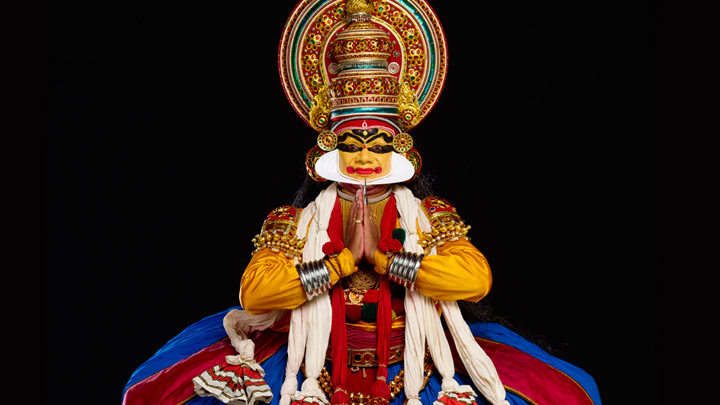
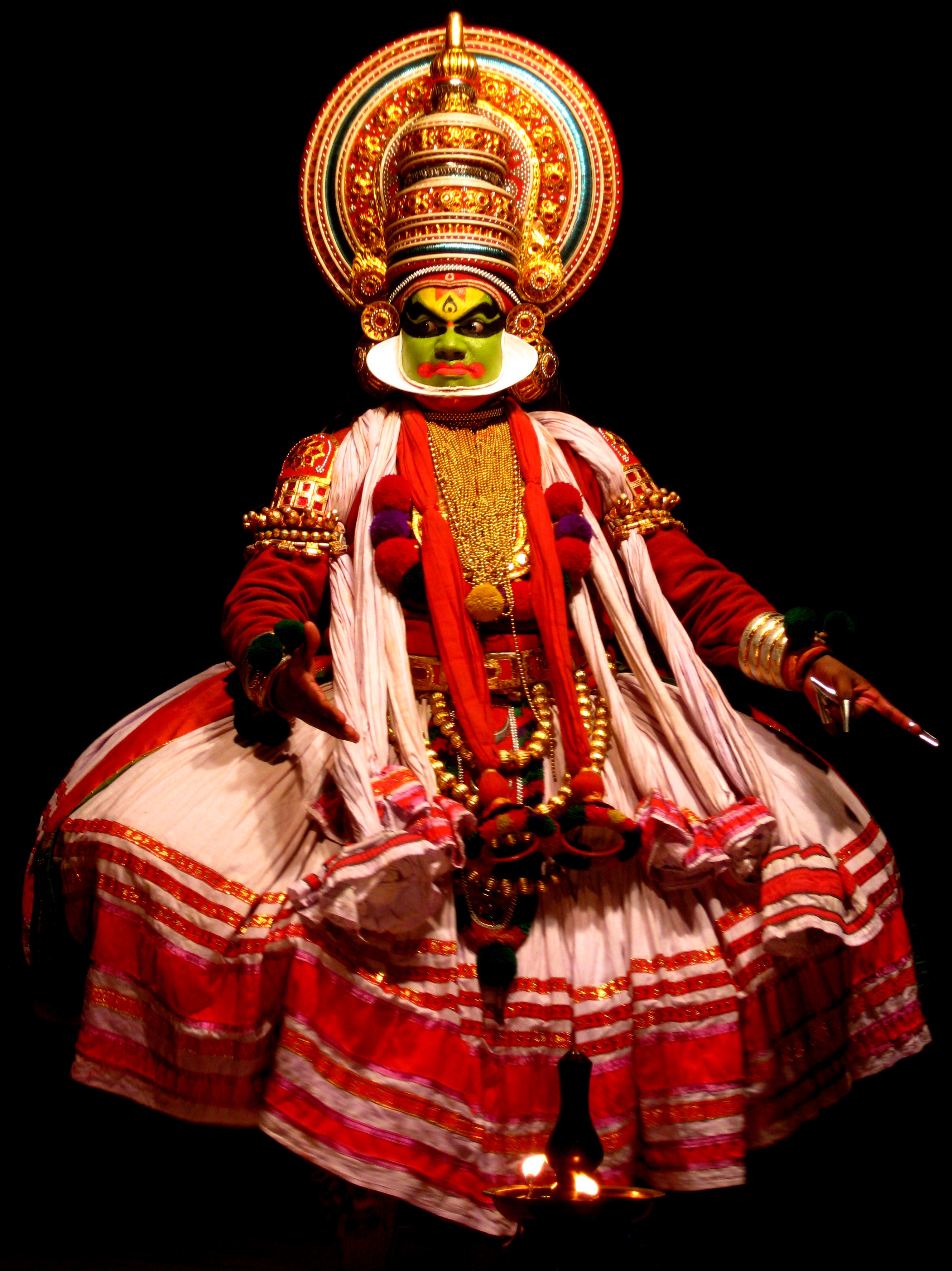
The Sangeet Natak Akademi recognizes eight dance-forms of India as Indian Classical Dance, viz, Bharatanatyam, Kathak, Kuchipudi, Odissi, Kathakali, Sattriya, Manipuri and Mohiniyattam.
Some scholars include even Chhau, Yakshagana and Bhagavata Mela to the list. The Culture Ministry of the Government of India too includes Chhau in its classical list.
All these dances are traditionally regional. All of them include music and recitation in local language or Sanskrit, and they represent a unity of core ideas, in a diversity of styles, costumes and expression.
The Natya Shastra is the foundational treatise for the Classical Dances of India, and this text is attributed to the ancient Sage Bharata Muni. It’s a very ancient text in Sanskrit.
Natya Shastra states that Dance and Performance Arts are a form of expression of spiritual ideas and the essence of Hindu Scriptures.


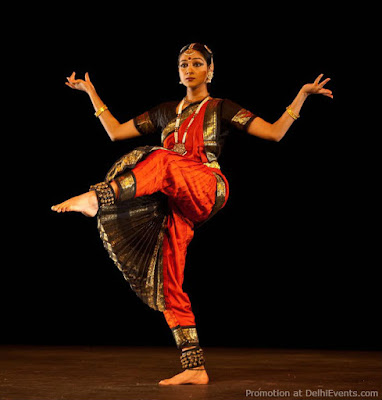
Bharatanatyam, is a major genre of Indian Classical Dance that originated in Tamil Nadu. Traditionally, Bharatanatyam has been a Solo Dance, that was performed exclusively by women, and expressed Hindu religious themes and spiritual ideas, particularly of Shaivism, but also of Vaishnavism and Shaktism.
Bharatanatyam’s theoretical foundations trace to the ancient Sanskrit text, NatyaShastra of Bharata Muni . Bharatanatyam is perhaps the oldest Classical Dance tradition of India.
The dance is accompanied by music and a singer, and typically the dancer’s Guru is present as the director and conductor of the performance and art.
The dance, as already mentioned, has traditionally been a form of a narration of Hindu Mythology and Hindu Spiritual Ideas from the Hindu Scriptures.
Bharatanatyam remained exclusive to Hindu temples through the 19th century. It was banned by the colonial British government in 1910. The Indian community protested against the ban and expanded it outside the temples in the 20th century.


Mohiniyattam is one of the two Classical Dances of India that developed and remained popular in the South Indian State of Kerala. The other Classical Dance-form from Kerala is Kathakali.
Mohiniyattam Dance gets its name from the word Mohini ; a ‘Hindu Mythological Enchantress’, an Incarnation of the Hindu God Maha Vishnu, who helps the good prevail over evil, by deploying His feminine powers.
Mohiniyattam’s roots, like all Classical Indian Dances, are in the NatyaShastra , the ancient Hindu Sanskrit text on Performance Arts.
It is traditionally a solo dance performed by women after extensive training.
The repertoire of Mohiniyattam includes music in the South Indian Carnatic style, singing and acting a play through the dance. The song is typically in Malayalam-Sanskrit hybrid.
The dance was ridiculed as a Devadasi prostitution system during the colonial British Raj, & banned by a series of laws from 1931 through 1938. The ban that was protested and partially repealed in 1940.
The socio-political conflict ultimately led to renewed interest, revival and reconstruction of Mohiniyattam by the people of Kerala.


Odissi is a very ancient Dance-Form of India, that originated in the Hindu Temples of Odisha , an eastern coastal state of India.
Odissi, in its history, was performed predominantly by women, and expressed Hindu Religious stories and spiritual ideas, particularly of Vaishnavism (Hindu God Vishnu as Lord Lord Jagannath).
Odissi performances have also expressed ideas of other Hindu traditions, such as those related to Hindu Gods Shiva and Surya, as well as Hindu Goddesses (Devi) of Shaktism.
The theoretical foundations of Odissi trace back to the same ancient Sanskrit text NatyaShastra . Its existence in antiquity is evidenced by the Odissi dance poses in the sculptures of Hindu temples, and archeological sites related to Hinduism, Buddhism and Jainism.
The Odissi dance tradition declined during the Islamic rule era, and was suppressed under the British Rule. The suppression was protested by the Indians, which was followed by its revival, reconstruction and expansion, since India gained independence from the colonial rule.
Modern Odissi productions by Indian artists have presented a diverse range of experimental ideas, culture fusions, themes and plays.
Kathak :


Kathak is one of the eight major forms of Indian Classical Dance. The origin of Kathak is traditionally attributed to the traveling bards of ancient Northern India known as Kathakars or storytellers.
The term Kathak is derived from the Vedic Sanskrit word ‘Katha’ which means “Story”, and Kathaka which means “He who tells a story”.
Wandering Kathakas communicated stories from the Great Hindu Epics and Ancient Hindu Mythologies through dance, songs and music.
Kathak evolved during Indian Bhakti Movement particularly by incorporating the childhood stories and other stories of the Hindu God Krishna, as well as independently in the North Indian Royal Courts.
Kathak dance form emphasizes rhythmic foot movements, adorned with small bells (Ghungroo), and the movement harmonized to the music.
The main focus of the dance becomes the eyes and the foot movements. The eyes work as a medium of communication of the story the dancer is trying to communicate. With the eyebrows the dancer gives various facial expressions.
Kathak as a performance art survived and thrived as an Oral Tradition, learnt and innovated from one generation to another verbally and through practice.
It was adapted by the Royal Mughal Courts in the 16th and 17th century particularly the Mughal Emperor Akbar .
It was ridiculed by the British Raj and hence declined in the colonial British era. It was reborn once again, as India gained independence and sought to rediscover its ancient roots with a patriotic sense of national identity through the ancient art-forms.


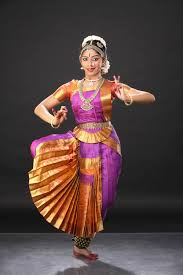
Kuchipudi is one of the eight major Indian Classical Dances. It originated in a village named Kuchipudi in the South Indian State of Andhra Pradesh.
Kuchipudi is a dance-drama performance art, with its roots in the same ancient Sanskrit text of Natya Shastra of the Hindus. It grew as a religious art linked to temples and spiritual beliefs, and traveling bards, like all other major Classical Dances of India.
Kuchipudi largely developed as a Hindu God Krishna-oriented Vaishnavism tradition, and it is most closely related to Bhagavata Mela performance art found in Tamil Nadu.
Kuchipudi performance usually begins with an invocation. Then, each costumed actor is introduced, their role stated, who then performs a short dance prelim to music.
Next, the performance presents pure dance. This is followed with expressive part of the performance (Nritya) . Vocalists and musicians accompany the artist, with the song recited in Telugu language, and the Tala and Raaga set to Indian Classical (Carnatic Music).
The typical musical instruments in Kuchipudi are Mridangam, Cymbals, Veena, Flute and the Tambura.


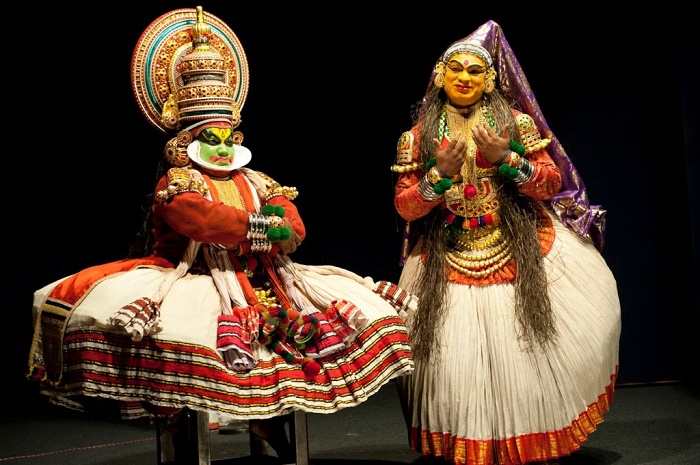
Yakshagana is a traditional theatre form that combines dance, music, dialogue, costume, make-up, and stage techniques with a unique style and form. This theatre style is mainly found in Tulunadu and some parts of Malenadu region’s of Karnataka and Kerala. Yakshagana is traditionally presented from dusk to dawn.
Yakshagana literally means the song (Gana) of the Yaksha (Nature Spirits).
Yakshagana is a separate genre of music, independent of Classical Carnatic Sangeetha and the Hindustani Music of India. It is believed to have survived as an indigenous phenomenon only in Karnataka.
A typical Yakshagana performance consists of background music, played by a group of musicians (known as the Himmela); and a dance and dialog group (known as the Mummela), who together enact poetic epics on stage.
A Yakshagana performance typically begins in the twilight hours, with an initial beating of the drums of several fixed compositions, called Abbara or Peetike.
This may last for up to an hour before the actors finally arrive on the stage. The actors wear resplendent costumes, head-dresses, and face paints.
A performance usually depicts a story from the “Kavya” (Hindu Epics) and the “Puranas” (Ancient Hindu Mythologies).
It consists of a story teller (the Bhagavatha) who narrates the story by singing (which includes prepared character dialogues) as the actors dance to the music, portraying elements of the story as it is being narrated.


******************************************
Related Posts (More Posts on Indian Classical Dance):
Indian Classical Dance Forms
Brihannatyanjali Dance Festival: A Grand Celebration of Classical Dance at Brihadeeswara Temple, Thanjavur
Indian Classical Dance Institutions in New Delhi
Kerala’s Kathakali: An Exquisite Indian Classical Dance Tradition
Graceful, Enchanting, and Timeless: Discover the Allure of Mohiniattam – the Mesmerizing Classical Dance Form of Kerala
Exploring India’s Classical Dance Forms: A Mesmerizing Blend of Spirituality and Artistry
Experience the Divine Bliss of Brahan Natyanjali: An Annual Indian Classical Dance Festival in the Majestic Brihadeeshwara Temple of Tanjore
London’s British Museum: A Stage for Indian Classical Dance Amidst Priceless Ancient Indian Treasures
Sattriya Nritya – A Majestic Journey into Assam’s Classical Dance Heritage
The Costumes and Jewellery of Indian Classical Dance Bharatanatyam: A Glorious Tradition
Celebrating the Legends of Bharatanatyam: A Tribute to India’s Classical Dance Icons
Sattriya: The Classical Dance Form of Assam
Classical Dance and Music Performances at Chidambaram Sri Nataraja Temple
The Spiritual Significance of Indian Classical Dance Forms
The Spiritual Symphony: Documentary Films on Classical Dance Festivals in Shiva Temples of Tamil Nadu During Shivaratri
A Journey Through India’s Classical Dance Festivals: 20 Must-Watch Documentary Films
Classical Dance as a Sacred Spiritual Practice in Ancient India
Shriram Bharatiya Kala Kendra, New Delhi: A Premier Institution for Indian Classical Dance, Music, and Folk Traditions
Darpana Academy of Performing Arts: A Legacy of Excellence in Classical Dance and Music
Ganesa Natyalaya: A Hub of Classical Dance Excellence in New Delhi
Kalapeetham: A Temple of Classical Dance and Spirituality in Mumbai
The Intersection of Indian Classical Dance and Mythology: A Divine Synergy
Discovering Nrityagram Dance Village in Bangalore: The Essence of Classical Dance
Kuchipudi: The Enchanting Elegance of India’s Classical Dance Heritage
Nalanda Dance Research Centre’s Nalanda Nritya Kala Mahavidyalaya in Mumbai: Preserving the Elegance of Indian Classical Dance
Khajuraho dance festival of Madhya Pradesh : A spectacular annual festival of Indian classical dances
Sattriya Nritya – A Majestic Indian Classical Dance from Assam
Mayura Natyanjali: The Mesmerizing Annual Classical Dance Festival in Mayiladuthurai, Tamil Nadu
Natya Kala Conference: A Celebration of Classical Dance and Artistry
Celebrating the Elegance: Classical Dance Festivals of Tamil Nadu
Bharata Natyam ( Bharatanatyam) : One of the classical dance forms of India
Chitra Visweswaran – Exponent of the Indian classical dance Bharatanatyam
Classical Music & Dance Academies of India
The Glorious Chola Empire: India’s Renaissance of Art, Sculpture, Architecture, Tamil Literature, Classical Music, and Dance
Celebrating India’s Heritage: Classical Music and Dance Festivals at Historical Forts
K. Viswanath’s Blockbuster Film Sankarabharanam (1980): A Seminal Film on Classical Music and Dance Reflecting the Cultural Heritage of Andhra Pradesh
Shaniwar Wada Dance and Music Festival: A Celebration of Classical Heritage in Pune, Maharashtra
Konark Dance and Music Festival: A Celebration of Classical Heritage at the Sun Temple, Konark
The Evolution of Indian Dance Forms: From Classical to Contemporary
Saraswati Music College: A Hub of Classical Music and Dance in New Delhi
The Legacy of Indian Women in Classical Arts: Celebrating the Contributions of Legendary Women in Dance, Music, and Arts
Folk & Classical Music and Dance Tourism in India: A Catalyst for Local Economies and Cultural Revival
Embracing the Elegance: DD Bharati’s Classical Music and Dance Programs
Darbar Festival (UK): A Celebration of Indian Classical Music and Dance
The Enchanting Fusion: Indian Classical Music and Dance in Indian Cinema
The Architectural Beauty of Chidambaram Nataraja Temple, Tamil Nadu: Sacred Abode of Lord Shiva as the Cosmic Dancer
The Glory of Tamilnadu’s Chidambaram Nataraja Temple: A Journey into the Mythical World of Lord Shiva’s Cosmic Dance
Sacred Rhythms of Kukke Subrahmanya: Cultural Festivals of Music, Dance, and Yakshagana
God’s Own Festivals: A Journey Through Kerala’s Cultural, Musical, and Dance Festivals
Khajuraho Dance Festival, Madhya Pradesh
Sirpur Dance Festival of Chatthisgarh
Mamallapuram Dance Festival, Tamil Nadu
Experience the Divine Artistry of Natyanjali Chidambaram: A Breathtaking Annual Dance Festival in Tamil Nadu’s Nataraja Temple
Get Enchanted by the Rhythmic Beats: Mukteshwar Dance Festival of Odisha – A Celebration of Dance, Music, and Culture
Mesmerizing Rhythms and Timeless Traditions: Experience the Splendor of Karnataka’s Pattadakal Dance Festival
Rhythms by the Sea: The Annual Mamallapuram Dance Festival of Tamil Nadu
Celebrating Cultural Harmony: Pragjyoti International Dance Festival, Assam
From Raag to Reel: How Classical & Semi-Classical Music Shaped Indian Cinema
Natyanjali Dance Festival of Thirunallar (Dharbaranyeswarar Temple)
Natyanjali Dance Festival of Thiruvarur (Thyagaraja Temple, Tamil Nadu)
Natyanjali Dance Festival at Kumbakonam’s Adi Kumbeswarar Temple — Dance as Devotion (since 2002)
Marudha Natyanjali Dance Festival (Thiruvidaimarudur Mahalingeswarar Temple)
Pancha Sabhai Sthalams: The Five Temples of Shiva’s Cosmic Dance in Tamil Nadu
The Masterminds & Organizers Behind India’s Renowned Dance and Music Festivals
Vrindavan Cultural Festivals: A Canvas of Dance, Music, and Spirituality at ISKCON Krishna Balaram Mandir
Navarathri at Kapaleeswarar Temple, Mylapore, Chennai: A Grand Celebration of Devotion, Music, Dance & Golu Dolls
Discover the Spiritual Grandeur of the Konark Dance Festival: An Invitation to Filmmakers and TV Channels
One reply on “Exploring India’s Classical Dance Forms: A Mesmerizing Blend of Spirituality and Artistry”
Nice